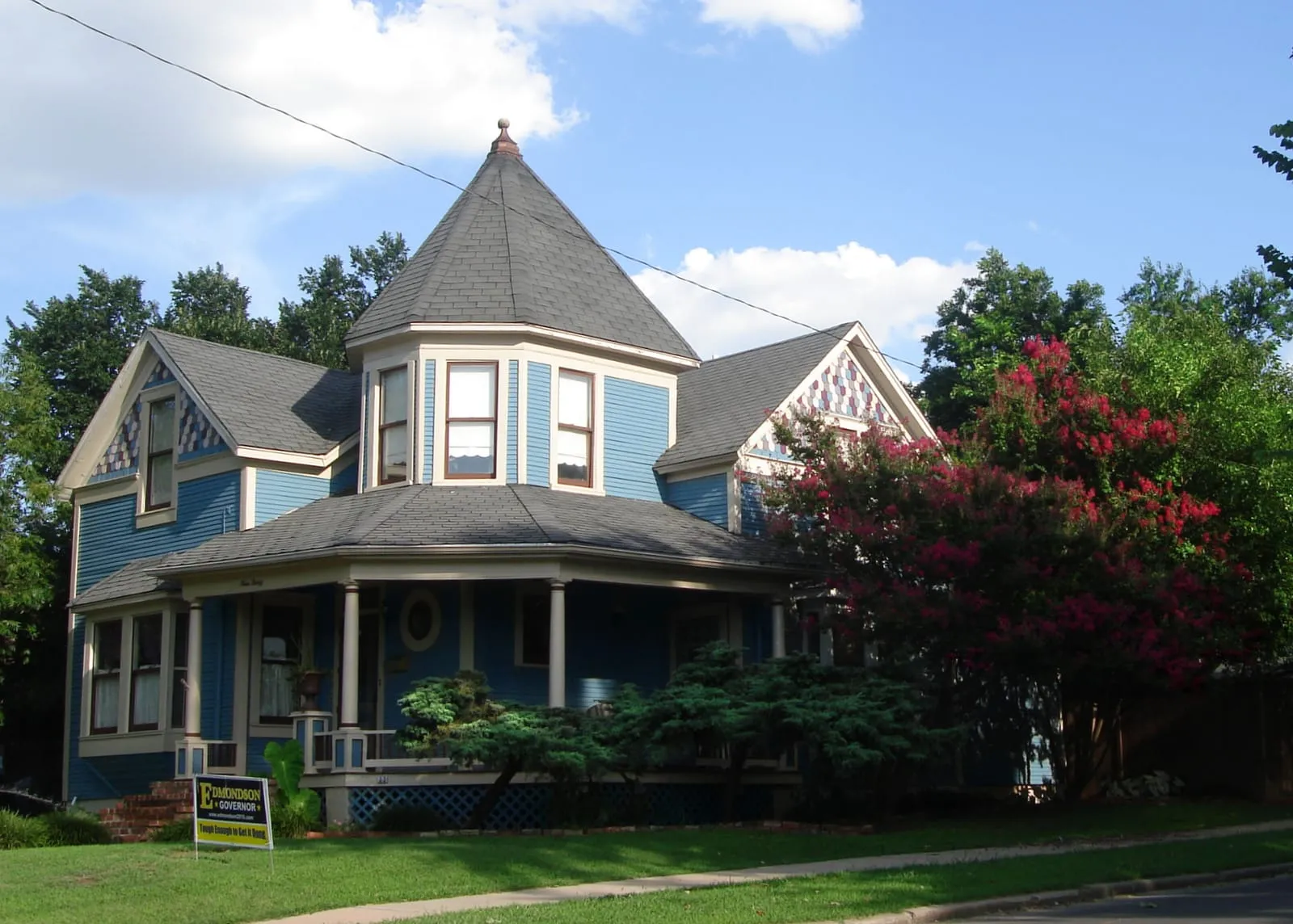

Oklahoma’s homestead exemption is small but easy to get: it takes $1,000 off the assessed value of the home you own and live in [1]. Lower-income households can stack a second $1,000 on top [3]. Owners 65 and older under their county’s income limit can also lock in their home’s taxable value [4][7]. All three are filed with your county assessor, and the usual deadline is March 15 [5][7].
At a glance
- Homestead exemption
- $1,000 of assessed value [1]
- Additional homestead exemption
- Another $1,000 if household income was $30,000 or less [3]
- Senior valuation limitation
- Age 65+, income at or below the HUD county median [6][7]
- Deadline
- March 15, or 30 days after a valuation increase notice [5][7]
- Refund for low-income seniors and disabled owners
- Up to $200, income $12,000 or less [8]
| Program | Who qualifies | Benefit | Form |
|---|---|---|---|
| Homestead exemption | Owner who lives in the home on January 1 | $1,000 off assessed value | OTC 921 |
| Additional homestead exemption | Head of household, prior-year gross household income $30,000 or less | Another $1,000 off assessed value | OTC 994 |
| Senior valuation limitation | Age 65+ on January 1, income at or below the HUD median for the county | Taxable value stops rising | OTC 994 |
| 100% disabled veterans exemption | Veteran rated 100% service-connected disabled, or surviving spouse | Full value of the homestead exempt | OTC 998 |
| Property tax credit or refund | Age 65+ or totally disabled, gross household income $12,000 or less | Up to $200 | OTC 538-H |
The basic homestead exemption
Every qualifying homestead is exempt from property tax on $1,000 of its assessed value [1]. To qualify you must [2][5]:
- own the home and live in it as your residence on January 1 of the tax year,
- have your deed or other proof of ownership on record with the county clerk, and
- be an Oklahoma resident. A married couple and their minor children get only one homestead exemption in the state [2].
In a city or town, or in a platted subdivision, the homestead can’t be more than one acre [2].
What $1,000 of assessed value means
Oklahoma taxes homes on an assessed value , a slice of what the home is worth. Counties must assess at between 11% and 13.5% of fair cash value [6]. So the $1,000 exemption shields roughly $7,400 to $9,100 of your home’s market value from tax, depending on your county’s percentage. Your dollar savings depend on the local tax rates where you live.
How and when to apply
- Get Form 921 from your county assessor or the Tax Commission [5].
- File it by March 15 of the tax year, or within 30 days after you receive a notice that your valuation went up [5].
- Late? If you file after March 15, the exemption starts the following tax year [5].
You don’t have to apply in person [5]. Once granted, you don’t reapply as long as you keep living in the home and still qualify [5]. A new owner must file a new application [5].
The additional homestead exemption: $1,000 more
Oklahoma grants a second $1,000 of assessed value to a head of household whose gross household income for the previous calendar year was $30,000 or less [3]. There’s no age requirement in the statute [3].
“Gross household income” counts every kind of income received by everyone living in the home, taxable or not, including wages, Social Security, pensions, unemployment and capital gains. Gifts and veterans’ disability compensation don’t count [3].
- Form: OTC 994, filed with the county assessor [6][7].
- Deadline: March 15, or 30 days after a notice of valuation increase, whichever is later [3].
- Every year? Yes, unless you’re 65 or older as of March 15 and have qualified before [3][7]. If your income later goes over $30,000, you must tell the assessor [3].
The senior valuation limitation (the “senior freeze”)
Every homestead already has a cap: its fair cash value can’t rise more than 3% a year [6]. The senior valuation limitation goes further and stops the value from rising at all while you qualify [6].
- You’re 65 or older as of January 1.
- You own and live in the home as your homestead on January 1.
- Your gross household income for the previous year is at or below the HUD estimated median income for your county or metro area. The Tax Commission sends each county assessor the figure every year, so ask yours for the current number [6].
How to apply: file Form 994 with the county assessor by March 15, or within 30 days after a notice of valuation increase, whichever is later [4][7]. After you qualify, you don’t need to reapply each year, but you must tell the assessor if your income goes over the limit [4].
What it doesn’t stop [6]:
- New levies. Your tax can still rise if a bond issue or other new levy is added, or a court orders an extra levy.
- Improvements. A room addition, garage or similar improvement is valued and added to the limited value [4][6]. Normal repairs and things like wheelchair ramps generally don’t count [6].
- A sale or title change. The limit ends if you stop owning and living in the home or the title is transferred [6].
100% disabled veterans
A veteran who was honorably discharged and is rated by the U.S. Department of Veterans Affairs as 100% disabled from a service-connected injury or disease, or is paid at the 100% rate, can have the full value of the homestead and household personal property exempted [6]. Surviving spouses can qualify too [6]. Apply with the county assessor on Form 998 and bring your current VA award letter [6].
A refund of up to $200 for low-income seniors and disabled owners
The Tax Commission’s Form 538-H lets a head of household who is 65 or older or totally disabled, who lived in Oklahoma all of the previous year, and whose gross household income was $12,000 or less, claim back property tax paid on their home [8]. The refund is the tax paid above 1% of household income, up to $200 [8].
- Deadline: the Tax Commission must receive the claim by June 30 for taxes paid the year before [8].
- How: if you’re required to file an Oklahoma income tax return, the 538-H goes with it and the amount is claimed as a credit on Form 511. If you’re not, you file the 538-H by itself and get the refund by direct deposit or debit card [8]. Include a copy of your property tax bill [8].
Where to get help
- Your county assessor: the homestead forms, your assessed value, and this year’s senior income limit.
- Oklahoma Tax Commission, Ad Valorem Division: statewide rules and forms [6].
Sources
- 68 O.S. § 2889, Classifications of homesteads ($1,000 exemption) (OSCN)
- 68 O.S. § 2888, Homestead exemption (definition, one per family) (OSCN)
- 68 O.S. § 2890, Additional exemption allowed for homestead (OSCN)
- 68 O.S. § 2890.1, Application for limit on fair cash value of homestead property (OSCN)
- Oklahoma Tax Commission, Form 921, Application for Homestead Exemption (tax years 2027-2028)
- Oklahoma Tax Commission, OAC 710:10 Ad Valorem rules (2026)
- Oklahoma Tax Commission, Form 994, Application for Property Valuation Limitation and Additional Homestead Exemption (tax year 2027)
- Oklahoma Tax Commission, Form 538-H, Claim for Credit or Refund of Property Tax (2025)
Next steps
BestOklahoma has a business relationship with these companies, and we may earn money if you use them. How we make money
Credit repair company
Credit Saint
If an old debt or another item on your credit report looks wrong, Credit Saint can help you challenge it with the credit bureaus.
You can also dispute errors yourself, for free, with Equifax, Experian and TransUnion. No company can legally remove accurate, timely information, and results vary.
Learn about Credit Saint →Free financial app
Bolster
Bolster is a free app for keeping an eye on your credit and building credit history over time.
Check the app's terms for any optional paid features.
See Bolster →Credit monitoring and credit builder
Credit Squad
Credit Squad watches your credit and identity and alerts you to changes. Its credit builder, included with every plan, reports your monthly payment to all three credit bureaus as an on-time installment payment.
Paid monthly subscription; see Credit Squad's site for current plans and terms. Credit building depends on on-time payments, and results vary.
See Credit Squad →Common questions
How much is the homestead exemption in Oklahoma?
$1,000 of assessed value on the home you own and live in. If your household's gross income for the previous year was $30,000 or less, you can also get the additional homestead exemption, another $1,000 of assessed value.
When is the deadline to file for homestead exemption in Oklahoma?
March 15, or within 30 days after you receive a notice that your valuation went up, whichever is later. File Form 921 with your county assessor. If you file after March 15, the exemption starts the following year.
Does Oklahoma freeze property taxes for seniors?
It freezes the taxable value, not the tax. Homeowners 65 and older whose gross household income is at or below the HUD median income for their county can apply for the senior valuation limitation on Form 994. The bill can still go up if voters approve new levies, such as a bond issue.
Do I have to reapply for homestead exemption every year in Oklahoma?
Not for the regular exemption, as long as you keep living in the home. The additional homestead exemption must be filed each year unless you're 65 or older as of March 15 and have qualified before. The senior freeze doesn't need a new application each year, but you must tell the assessor if your income goes over the limit.